Spotlight on Amino Acids with Christian Wells
 This week we sat down with Christian Wells, Applications Team Leader to discuss all things Amino Acids...
Can you share a bit about your background?
I’ve been with Croda for close to 9 years and have spent the majority of my time focussed on understanding our offering within the excipient portfolio; delving into our products behaviours, functions and properties in pharmaceutical formulations. During my time at Croda, I have worked on the development of novel excipients, supported lipid manufacture and investigated the stability of pharmaceutical actives and excipients, with a particular interest in excipients for inhaled and nasal formulations. Prior to joining Croda I studied for a degree in Chemistry from Durham University. Currently I am part of a team based in the UK tasked with a range of functions from active and excipient stability through to supporting our customers on formulation solutions.
Why are amino acids an important focus in the pharmaceutical industry today?
Amino acids are natural compounds that are widely used and have a wide range of roles including acting as building blocks for small molecule, peptide and protein synthesis, applications across the biomanufacturing process as well as uses as buffering and stabilisation agents in final formulations (to name a few!). As you can tell, they are very versatile products, and their natural origin and safety offer appealing attributes that can help improve solubility, stability and bioavailability of therapeutics. Amino acids all share the same basic α-carboxylate, α -amino group and side chain structure; the side chain structure can vary from simple alkyl groups to more complex moieties and this range offers a multitude of properties that can be specific for certain application areas.
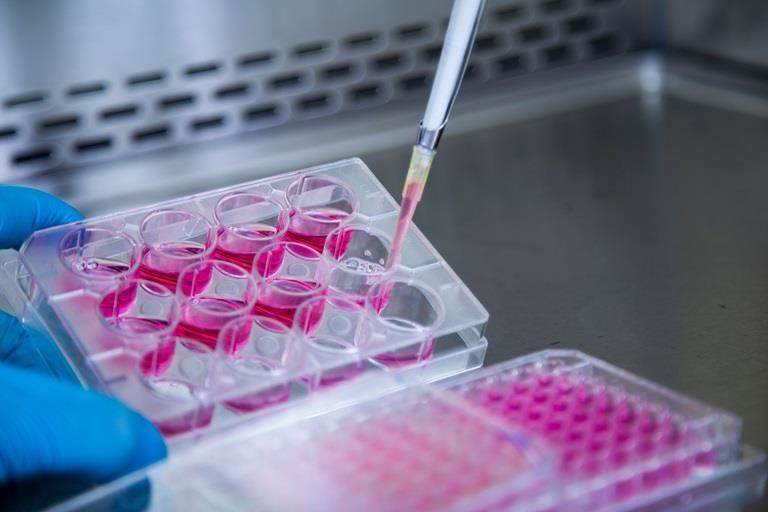
In the production of biologic actives for instance, L-arginine, L-histidine, their respective salts and others are used extensively in cell culture media to support growth and viability of cells. Their role, principally, is as a nitrogen source for cell metabolism during the biomanufacturing of proteins such as monoclonal antibodies, recombinants and viral vectors. L-arginine HCL for example helps play a key part in encouraging protein refolding during the production of recombinants in bacterial expression systems like E. coli. Proteins often fold incorrectly and can form insoluble aggregates with L-Arginine HCl helping to solubilize and refold these proteins into their biologically active conformations.
These traits are also found in final formulations with arginine/histidine used as buffering agents, protein stabilisers in liquid and lyophilised dosage forms as well as viscosity reducers in highly concentrated protein formulations.
What are the main challenges in using amino acids for bioprocessing and formulation?
As mentioned, amino acids have a wide range of applications across the pharmaceutical pipeline yet there are some challenges associated with their use. One such challenge is the impact of impurities on the performance and effectiveness of the amino acids and their impact more generally on the bioprocess or formulation. Metal impurities have been known to impact cell culture media performance and formulation stability. For cell media, trace elements have been found to impact cell growth, protein expression, glycosylation and protein quality and that even really small changes in these elemental concentrations can have a large impact on final product quality. Recently ‘USP-NF <1023> Evaluation strategy for trace elements in cell culture media used in the manufacture of recombinant therapeutic proteins’ was published that identified metals that have known impact on cell viability and product quality including iron, copper, magnesium and zinc. These can be introduced from a number of sources including the amino acids found in the cell culture. Depending upon the process and biologic composition, each of these elements can have a differing effect on the successful performance of the cell media.
The influence of these impurities is not limited to cell culture however; they have also been found to impact formulation stability, with metals such as iron and copper catalysing oxidative reactions that can induce protein degradation, aggregation or influence the stability of the other excipients in the drug product, such as polysorbates.
Ensuring that these elements are kept to a minimum in the amino acid product ensures batch-to-batch consistency across the pharmaceutical pipeline; from the efficiency of the cell culture media to the efficacy of the final drug product.
What is Croda Pharma doing to overcome these challenges?
At Croda, we are developing a range of highly purified amino acids that have reduced metals content and low endotoxins to overcome the challenges mentioned but also meet the demands of the regulators. These amino acids, initially focussing upon L-Arginine and L-Histidine and their respective HCl salts, have a range of applications across the biomanufacturing and formulation space, and their reduced metal profile will promote improved batch-to-batch consistency, meet the levels of regulatory compliance, offer improved protein yields and minimise instability risks in final formulations.
Alongside these amino acid-based products, Croda offers a range of high purity excipients and bioprocessing aids, which will complement our offering of amino acids, allowing us to broaden our offering of products and solutions across the range. These combinations of high purity excipients will look to alleviate any risk caused by impurities in the final drug product and process.
What are your team working on and can you share an application example?
Due to the range of application areas that amino acids encompass, we are focussed upon some of the principal areas where we know that reduced impurities can have a significant impact. As such, we are analysing L-arginine and L-histidines use in cell media and the implications of metals and concentration on cell viability. Additionally, we are analysing amino acids applications in highly sensitive formulations; these will focus upon biologic formulations where the introduction of low level contaminants can impact protein structure whilst also understanding the compatibility between amino acids and current marketed excipients such as polysorbate.
What’s next for amino acids in the industry?
Alongside some of the challenges I mentioned previously, there is a focus upon those amino acids that suffer from poor solubility and/or stability, which can greatly impact their bioavailability to the cells of interest or efficacy in formulation. To overcome these challenges, there are a number of research interests looking into modifications to amino acid structure to improve stability, solubility and overall performance. Amino acid modifications could greatly improve cell culture media feedstock efficiencies whilst providing the building blocks required for cell culture. Alongside these, there are always interest into different amino acids for different dosage forms and routes such as L-leucine being extensively used for inhaled and nasal spray dried formulations as a shell-protecting agent.
Can you share something that we don’t already know about you?
I currently play in a country band and also spend many hours on a golf course looking for my ball.
Explore BioXPro™ - High purity amino acids for bioprocessing and formulation
BioXPro™ high purity amino acids for bioprocessing

BioXPro™ high purity amino acids for biologics formulation

recent insights:

Veterinary Health
.jpg?w=768&la=en-GB&focalpointcrop=1&xratio=0&yratio=0&hash=EF48167B2398F47B9203EA4CD401EBF4)
CPHI Milan: Reflecting on the conversations, growing connections and creating opportunities shaping Croda Pharma
.jpg?w=768&la=en-GB&focalpointcrop=1&xratio=0&yratio=0&hash=DF5AF883A76A74E7440BBFC5C15F4C9A)